

Establishing a legal commercial presence in Bangladesh offers international investors and multinational corporations strategic access to a rapidly industrializing domestic market of over 170 million consumers, competitive operational cost structures, and tariff-free export access to key global markets. However, navigating the intersection of company incorporation, investment approvals, and foreign exchange regulations requires careful planning.
The legal framework governing foreign commercial entry is bifurcated: entity incorporation under the Companies Act 1994 falls under the Registrar of Joint Stock Companies and Firms (RJSC), whereas foreign investment facilitation, industrial registration, work permits, and branch/liaison office approvals are governed by the Bangladesh Investment Development Authority (BIDA) under the BIDA Act 2016 and the Foreign Private Investment (Promotion and Protection) Act 1980.
Regulatory Principle: A locally incorporated subsidiary is an independent Bangladeshi legal entity governed by company law, whereas a branch or liaison office is a direct legal extension of an overseas parent company requiring mandatory prior BIDA establishment permission.
Can Foreign Investors Own 100% of a Company in Bangladesh?
Under the Foreign Private Investment (Promotion and Protection) Act 1980 and the National Industrial Policy 2022, Bangladesh permits 100% foreign equity ownership in almost all manufacturing, software, engineering, and commercial service sectors without requiring a mandatory local partner.
Foreign investors in a wholly owned subsidiary enjoy statutory parity with domestic enterprises, including equal protection under the law, protection against nationalization, and full entitlement to repatriate dividends and invested capital under Bangladesh Bank foreign exchange rules.
Sectoral Ownership Restrictions & Reserved Sectors
While the vast majority of industries welcome 100% foreign ownership, foreign promoters must verify sectoral restrictions prior to committing capital:
- Reserved Sectors (100% Closed to Private & Foreign Investment): 1. Arms, ammunition, and defense equipment; 2. Forest plantation and mechanized extraction inside reserved forests; 3. Production of nuclear energy; 4. Security printing (currency notes) and government minting.
- Controlled & Regulated Sectors (Requiring Line Ministry / Regulatory NOCs): Commercial banking and financial leasing (Bangladesh Bank); Insurance underwriting (IDRA); Telecommunications and ISP infrastructure (BTRC); Aviation and deep-sea maritime fishing; Pharmaceuticals and biotech (Directorate General of Drug Administration - DGDA).
- Ownership Verification Checklist: 1. Confirm your proposed commercial activities against the National Industrial Policy 2022 schedules; 2. Determine whether your sector mandates line ministry licensing before or after RJSC incorporation; 3. Establish whether foreign promoters require BIDA work permits (recommending minimum USD 50,000 foreign inward remittance).
Types of Foreign Business Structures in Bangladesh
International businesses generally establish presence through one of three formal corporate vehicles:
| Strategic Factor | Wholly Owned Subsidiary (Private Ltd) | Branch Office | Liaison / Representative Office |
| Legal Personality | Separate Bangladesh Legal Entity | Extension of Overseas Parent | Extension of Overseas Parent |
| Parent Liability | Limited to Uncalled Share Capital | 100% Unlimited Parent Liability | 100% Unlimited Parent Liability |
| Commercial Revenue | Fully Permitted (Local & Export Sales) | Permitted only if explicitly approved | Strictly Prohibited (Zero Local Revenue) |
| Governing Law | Companies Act 1994 | BIDA Guidelines & Companies Act 1994 | BIDA Guidelines & Companies Act 1994 |
| Primary Approval | RJSC Incorporation (BIDA optional/advisory) | Mandatory Prior BIDA Approval | Mandatory Prior BIDA Approval |
| Initial Remittance | No statutory minimum (USD 50K for work permits) | Min USD 50,000 initial inward remittance | Min USD 50,000 initial inward remittance |
| Local Bank Account | Standard Corporate Operational Account | Permitted for approved commercial ops | Limited operational expenditure account |
| Ongoing Compliance | Corporate tax return, audit, RJSC Form C/XII | Corporate tax return, audit, BIDA renewal | Quarterly/annual BIDA & NBR expense filing |
| Ideal Use Case | Long-term trading, manufacturing, tech ops | Contract execution, after-sales, engineering | Market research, liaison, sourcing oversight |
Option 1 — Wholly Owned Private Limited Company (Subsidiary)
A Private Limited Company incorporated under the Companies Act 1994 is the most robust and versatile structure for international corporations. It possesses perpetual succession, can acquire and own commercial real estate, execute binding commercial contracts, borrow from domestic banking institutions, and hire local and foreign personnel.
Option 2 — Branch Office
A Branch Office operates as an operational outpost of an established foreign corporation. It cannot engage in commercial trading beyond the specific activities approved by the BIDA Inter-Ministerial Committee. A branch office is primarily chosen by international EPC contractors, engineering consortiums, and technology vendors executing specific long-term project agreements in Bangladesh.
Option 3 — Liaison or Representative Office
A Liaison Office (often termed a Representative Office) acts solely as a communication conduit between the overseas corporate head office and local Bangladeshi trade counterparties. By statutory mandate, a liaison office cannot undertake any commercial, invoicing, trading, or revenue-generating activities. Its entire operational budget must be funded 100% through inward foreign currency remittances from its parent company.
BIDA Approval in Bangladesh: Who Needs It?
A common misconception among foreign founders is confusing RJSC company incorporation with BIDA investment approval. Each serves distinct regulatory functions:
| Entity Structure / Activity | BIDA Approval Requirement | Governing Regulatory Authority |
| Private Limited Subsidiary (General Commercial/Trading) | Not required for incorporation; optional post-incorporation BIDA project registration | RJSC (Primary Incorporation) |
| Private Limited Subsidiary (Industrial/Manufacturing) | Mandatory BIDA Industrial Project Registration (for import incentives & utilities) | RJSC + BIDA Industrial Wing |
| Foreign Branch Office | Mandatory Prior Permission before commencing operations or opening bank accounts | BIDA Inter-Ministerial Committee |
| Foreign Liaison / Representative Office | Mandatory Prior Permission before establishing office premises | BIDA Inter-Ministerial Committee |
| Entity Located in Export Processing Zone | Governed under BEPZA regime rather than standard BIDA rules | Bangladesh Export Processing Zones Authority (BEPZA) |
| Entity Located in Special Economic Zone | Governed under BEZA framework with One-Stop-Service clearance | Bangladesh Economic Zones Authority (BEZA) |
Documents Required for Foreign Company Registration
Document readiness is the single biggest determinant of registration turnaround times. International records must be authenticated according to Bangladesh consular rules:
Private Limited Company With Foreign Shareholders Checklist
- Approved RJSC Name Clearance Certificate: Secured online via roc.gov.bd (valid for 30 calendar days).
- Memorandum & Articles of Association (MoA & AoA): Executed by foreign corporate representatives or individual shareholders.
- Director & Shareholder Identity Records: Certified passport copies for foreign nationals; NIDs and 12-digit e-TINs for resident directors.
- Foreign Corporate Shareholder Records (if parent company holds equity): Certificate of Incorporation, Memorandum/Articles, Board Resolution authorizing investment, and Power of Attorney authorizing a local signatory (notarized and apostilled/consular-legalized).
- Bank Encashment Certificate: Official certificate from an Authorized Dealer (AD) bank in Bangladesh confirming inward remittance of foreign equity capital.
- Registered Office Tenancy Agreement: Commercial premises lease deed and landlord holding tax receipt.
Foreign Company Branch & Liaison Office Checklist
- Formal application submitted through the BIDA One Stop Service (OSS) portal.
- Certified true copy of the parent company's Certificate of Incorporation, Memorandum, and Articles of Association (attested by Bangladesh Embassy/High Commission).
- Audited financial statements of the parent company for the preceding two to three fiscal years.
- Board of Directors resolution resolving to open a Branch or Liaison Office in Bangladesh and appointing the Country Representative.
- Power of Attorney issued in favor of the Country Representative (apostilled or consular legalized).
- Detailed narrative of proposed activities, staffing projection, and projected operational budget.
BIDA Application Process: Step-by-Step Guide
For Branch and Liaison offices, the official clearance sequence is administered through the BIDA OSS platform (bidaquickserv.org):
- Step 1: Structure & Activity Scrutiny: Define permitted scope and confirm whether activities require line ministry clearances.
- Step 2: Consular Legalization: Notarize and attest parent company charter documents and board resolutions at the nearest Bangladesh Embassy or High Commission.
- Step 3: Digital Submission via BIDA OSS: Register on the BIDA portal and upload the prescribed application form alongside all attested annexures.
- Step 4: Statutory Fee Deposit: Pay the prescribed government scrutiny fee via treasury challan or integrated payment gateway.
- Step 5: Inter-Ministerial Scrutiny: The BIDA Screening Committee and Inter-Ministerial Committee (comprising Ministry of Home Affairs, NBR, and Bangladesh Bank representatives) evaluate the petition.
- Step 6: Security Clearance Liaison: Ministry of Home Affairs initiates background verification for the foreign entity and appointed representatives.
- Step 7: Issuance of Provisional / Final Approval: BIDA issues the official permission letter, normally valid initially for 3 years (renewable).
- Step 8: Inward Remittance Transfer: Remit the statutory minimum operational fund of USD 50,000 into a designated Authorized Dealer bank within 60 days of approval.
- Step 9: RJSC Part XI Registration: File Form 36/Form 37 under Sections 378–392 of the Companies Act 1994 to register the foreign office with the corporate registrar.
- Step 10: Post-Approval Permits: Secure commercial Trade License, corporate e-TIN from NBR Circle 55 (Expatriate Circle), and 13-digit VAT/BIN.
Foreign Investment Remittance and the Encashment Certificate
In Bangladesh foreign exchange practice, transferring equity capital requires strict procedural compliance with the Bangladesh Bank Guidelines for Foreign Exchange Transactions (GFET).
An Encashment Certificate is an official statutory instrument issued by a licensed commercial bank holding an Authorized Dealer (AD) license in Bangladesh. It certifies that foreign currency remitted from an overseas jurisdiction was converted into Bangladeshi Taka (BDT) and credited specifically toward subscription of equity shares.
Critical Compliance: The SWIFT message (MT103) transmitting capital must explicitly cite the payment purpose as: 'Inward equity investment / Share capital subscription in [Proposed Company Name]'. If funds are transferred as general consultancy fees or loans, the AD bank cannot issue an Encashment Certificate for RJSC share capital issuance.
Corporate Bank Account Opening for Foreign-Owned Companies
Foreign investors must understand the two-stage corporate banking lifecycle in Bangladesh:
- Stage 1 — Temporary Capital Account: Opened prior to full incorporation to receive inward foreign equity remittances. The AD bank locks these funds exclusively for share capital issuance, issues the statutory Encashment Certificate, and holds the balance until RJSC issues the Certificate of Incorporation.
- Stage 2 — Operational Corporate Current Account: Following RJSC incorporation, the temporary capital account is converted into a fully operational commercial current account. The company can now issue corporate checks, access internet banking, execute vendor payments, and establish credit facilities.
- Bank Due Diligence Checklist: Commercial banks perform rigorous Anti-Money Laundering (AML) and Know Your Customer (KYC) screening. Promoters must supply beneficial ownership declarations, source-of-wealth documentation, and personal passport records for all ultimate beneficial owners (UBOs) holding 10% or more equity.
Foreign Currency, Investment Funding, and Profit Repatriation
Under Chapter 10 of the Bangladesh Bank Foreign Exchange Guidelines and the Foreign Private Investment (Promotion and Protection) Act 1980, foreign equity investors enjoy full statutory rights to repatriate net profits and dividends.
- Dividend Repatriation Mechanism: Dividends declared out of audited post-tax profits can be remitted abroad through the designated AD bank without prior Bangladesh Bank approval, provided the company submits audited financial statements, board resolutions, tax deduction at source (TDS under Section 117 of the Income Tax Act 2023), and an auditor's certificate of solvency.
- Royalties & Technical Fees: Technical assistance and royalty remittances up to 6% of sales or machinery value are generally permissible under BIDA general guidelines; remittances exceeding statutory thresholds require prior BIDA authorization.
- Capital Liquidation Repatriation: In the event of company dissolution or share sale to a resident, proceeds can be remitted abroad subject to fair market valuation audit and Bangladesh Bank clearance.
Registration Fees, Government Charges, and Expected Costs
Cost predictability is essential for cross-border budgetary planning. Costs are strictly categorized between official government treasury disbursements and professional legal fees:
| Statutory / Cost Component | Responsible Official Agency | Applicable Cost Benchmark | Official Basis / Reference |
| RJSC Name Clearance | Registrar of Joint Stock Companies | BDT 200 + 15% VAT (BDT 230) | Companies Act 1994, Section 11 |
| Capital Stamp Duty & Filing | Internal Resources Division / RJSC | BDT 4,000 to 35,000+ (Tiered by Capital) | Non-Judicial Stamp Act 1899 |
| BIDA Branch/Liaison Processing | Bangladesh Investment Development Authority | BDT 25,000 + 15% VAT (approx. BDT 28,750) | BIDA OSS Statutory Fee Schedule |
| Mandatory Minimum Operational Fund | Authorized Dealer Commercial Bank | Minimum USD 50,000 Inward Remittance | BIDA Guidelines for Branch/Liaison |
| Dhaka Commercial Trade License | DNCC / DSCC City Corporation | BDT 10,000 to 25,000 + 15% VAT | City Corporation Taxation Rules 2015 |
| Expatriate Work Permit Processing | BIDA Expatriate Employment Wing | BDT 5,000 to 10,000 per expatriate | BIDA Work Permit Guidelines |
| Professional Legal & Secretarial Advisory | Corporate Law / Advisory Firm (EasyTax) | Fixed-scope engagement fee | Client Engagement Letter |
How Long Does Foreign Company Registration Take?
Turnaround timelines vary substantially depending on entity classification and document legalization readiness:
| Corporate Formation Phase | Wholly Owned Subsidiary (Private Ltd) | Branch / Liaison Office |
| Name Clearance & Pre-Vetting | 1–2 Business Days | Not applicable (Uses parent name) |
| Document Notarization & Consular Attestation | 5–10 Business Days (Overseas) | 7–14 Business Days (Overseas) |
| Temporary Bank Account & Remittance Encashment | 3–5 Business Days | Post-approval milestone |
| Primary Government Approval / Incorporation | 4–7 Business Days (RJSC) | 30–60 Days (BIDA Inter-Ministerial Review) |
| Tax (e-TIN), Trade License & VAT/BIN Setup | 5–7 Business Days | 7–10 Business Days |
| Full Operational Bank Account Activation | 3–5 Business Days | 5–7 Business Days |
| Est. Total Turnaround | 2–4 Weeks from document receipt | 6–10 Weeks from BIDA submission |
Tax, Audit, and Ongoing Compliance After Registration
Foreign-invested companies in Bangladesh operate under strict annual regulatory compliance obligations:
- Corporate Income Tax Rates: For FY 2024–2026, non-publicly traded private limited companies are subject to a standard corporate tax rate of 27.5% (which can reduce to 22.5% if all transactions and receipts pass through formal banking channels). Foreign branch offices are taxed at 30% on net taxable Bangladesh profits.
- Value Added Tax (VAT & BIN): Every commercial operating entity must obtain a 13-digit Business Identification Number (BIN) under the Value Added Tax and Supplementary Duty Act 2012 and submit monthly Mushak 9.1 returns by the 15th of each calendar month.
- Annual Statutory Audit: Financial statements must be audited annually by a licensed Chartered Accountancy firm registered with the Institute of Chartered Accountants of Bangladesh (ICAB).
- Annual RJSC Filings: Companies must convene an Annual General Meeting (AGM) and file Form C (Annual Return of Share Capital), Form XII (Directors), and audited accounts with RJSC within 30 days of the AGM.
- BIDA Bi-Annual Reporting: Branch and liaison offices must submit half-yearly audited receipts and expenditure statements to BIDA and Bangladesh Bank.
Common Mistakes Foreign Investors Should Avoid
- 1. Confusing RJSC Incorporation with BIDA Approval: Assuming an incorporated subsidiary automatically has BIDA branch approval, or vice versa.
- 2. Omitting Specific Remittance Purpose in SWIFT Messages: Remitting capital without explicit 'equity subscription' notation, resulting in bank refusal to issue an Encashment Certificate.
- 3. Assuming Liaison Offices Can Invoice Clients: Issuing local commercial bills from a representative office, which triggers severe penalties for unauthorized commercial trading.
- 4. Underestimating Consular Attestation Timelines: Overlooking the requirement that corporate documents executed overseas must be attested by the Bangladesh Embassy or High Commission.
- 5. Setting Unnecessarily High Initial Authorized Capital: Inflating authorized capital without immediate need, which triggers substantial non-refundable government stamp duties under the Stamp Act 1899.
- 6. Incomplete Beneficial Ownership Documentation: Failing to prepare personal identity and address records for ultimate beneficial owners holding 10%+ equity during bank KYC.
- 7. Neglecting Monthly Withholding Tax & VAT Filing: Forgetting that dormant or initial-stage entities must still file 'Nil' monthly VAT returns and quarterly withholding statements.
- 8. Failing to Obtain Commercial Premises Holding Tax Receipts: Signing leases in residential buildings, which prevents municipal revenue officers from issuing a commercial Trade License.
How Professional Company Registration Support Can Help
Navigating cross-border company incorporation, BIDA committee reviews, and Authorized Dealer banking procedures requires senior legal oversight. EasyTax's corporate law and tax division provides comprehensive foreign direct investment advisory:
- Pre-incorporation entity structure assessment and sector eligibility reviews.
- Complete drafting of customized Memorandum and Articles of Association (MoA & AoA).
- Facilitation of temporary capital bank accounts and inward remittance Encashment Certificates.
- Full representation before RJSC for digital entity incorporation and certified true copies.
- Preparation and liaison for BIDA Branch and Liaison office establishment applications via BIDA OSS.
- Post-incorporation execution: Corporate e-TIN, Dhaka Trade License (DNCC/DSCC), and 13-digit VAT/BIN.
- Operational corporate bank account onboarding coordination with leading commercial banks.
Ready to establish your corporate presence in Bangladesh? EasyTax provides end-to-end legal incorporation, BIDA approval facilitation, and corporate banking onboarding for multinational companies and foreign founders. Explore Foreign Company Registration Services or Book an International Investment Consultation.
Frequently Asked Questions
1. Can a foreigner own 100% of a company in Bangladesh?
Yes. Under the Foreign Private Investment (Promotion and Protection) Act 1980 and the National Industrial Policy 2022, foreign nationals and overseas corporate entities can own 100% of the equity in a Bangladesh Private Limited Company in almost all commercial, software, and industrial sectors without requiring a local partner.
2. How can a foreign company register in Bangladesh?
A foreign company can register by incorporating a wholly owned subsidiary through the Registrar of Joint Stock Companies and Firms (RJSC) under the Companies Act 1994, or by applying for a Branch Office or Liaison Office license through the Bangladesh Investment Development Authority (BIDA) via the BIDA OSS portal (bidaquickserv.org).
3. What is the difference between a subsidiary, branch office, and liaison office?
A subsidiary is an independent legal entity with limited liability permitted to conduct full commercial trading and local billing. A branch office is an extension of the overseas parent company permitted to conduct approved commercial activities (such as project execution). A liaison office is strictly a non-commercial representative office funded 100% via inward foreign remittance, prohibited from earning local revenue.
4. Does every foreign-owned company need BIDA approval?
No. Incorporating a standard commercial or trading Private Limited Company with foreign shareholding is executed directly through the RJSC under company law. BIDA approval is mandatory for Branch Offices, Liaison Offices, industrial manufacturing project registrations, and expatriate work permits.
5. What documents are required for BIDA branch office registration?
Requirements include the foreign parent company's Certificate of Incorporation, Memorandum and Articles of Association (notarized and attested by the nearest Bangladesh Embassy), audited balance sheets for the preceding 2–3 fiscal years, a board resolution approving the office opening, Power of Attorney for the country representative, and a 3-year projected operational budget.
6. Can a liaison office generate revenue or issue invoices in Bangladesh?
No. Under Section 15 of the Foreign Private Investment Act 1980 and BIDA regulations, a liaison office cannot engage in commercial trading, enter fee-earning contracts, or issue local invoices. All operational costs must be funded through inward foreign currency remittances from its parent company.
7. What is an Encashment Certificate, and why is it needed?
An Encashment Certificate is an official statutory certificate issued by an Authorized Dealer (AD) commercial bank in Bangladesh confirming that foreign currency was remitted from an overseas jurisdiction and converted into BDT specifically for equity share subscription. It is the mandatory legal evidence required by RJSC to issue shares to foreign promoters.
8. How can foreign investors remit capital to Bangladesh?
Capital must be wired via normal international banking channels (SWIFT MT103) from the investor's overseas bank account directly to a temporary capital account opened with an Authorized Dealer bank in Bangladesh. The wire instructions must explicitly state that the transfer is for equity share capital subscription.
9. Can a foreign-owned company open a corporate bank account in Bangladesh?
Yes. Foreign-owned companies can open corporate bank accounts with licensed commercial banks in Bangladesh. Prior to incorporation, a temporary account receives equity capital to generate the Encashment Certificate; post-incorporation, this is converted into a fully operational commercial current account following standard KYC and beneficial ownership vetting.
10. Can profits and dividends be remitted abroad from Bangladesh?
Yes. Under Chapter 10 of Bangladesh Bank's Guidelines for Foreign Exchange Transactions (GFET), post-tax dividends declared out of audited net profits can be remitted to foreign shareholders through an Authorized Dealer bank without prior central bank approval, subject to withholding tax deduction (TDS) and auditor certification.
11. How much does it cost to incorporate a foreign-owned company?
Official costs include RJSC name clearance (BDT 230), non-judicial stamp duty and RJSC registration fees based on authorized capital (typically BDT 15,000 to BDT 45,000 for standard startup capital brackets), commercial Trade License fees (BDT 10,000 to BDT 25,000), and consular attestation fees. Professional legal and advisory fees depend on the complexity of corporate structuring.
12. How long does the registration and approval process take?
Incorporating a wholly owned subsidiary typically takes 2 to 4 weeks once notarized and consular-attested overseas documents are available in Dhaka. Establishing a Branch or Liaison Office requires approximately 6 to 10 weeks due to inter-ministerial screening and security clearance procedures.
Planning to establish your business in Bangladesh? Get professional legal assistance with RJSC company registration, incorporation documentation, applicable BIDA application coordination, and corporate bank account opening preparation. Explore Company Registration Services or Request Corporate Banking Coordination.
Verified Legal & Editorial Review
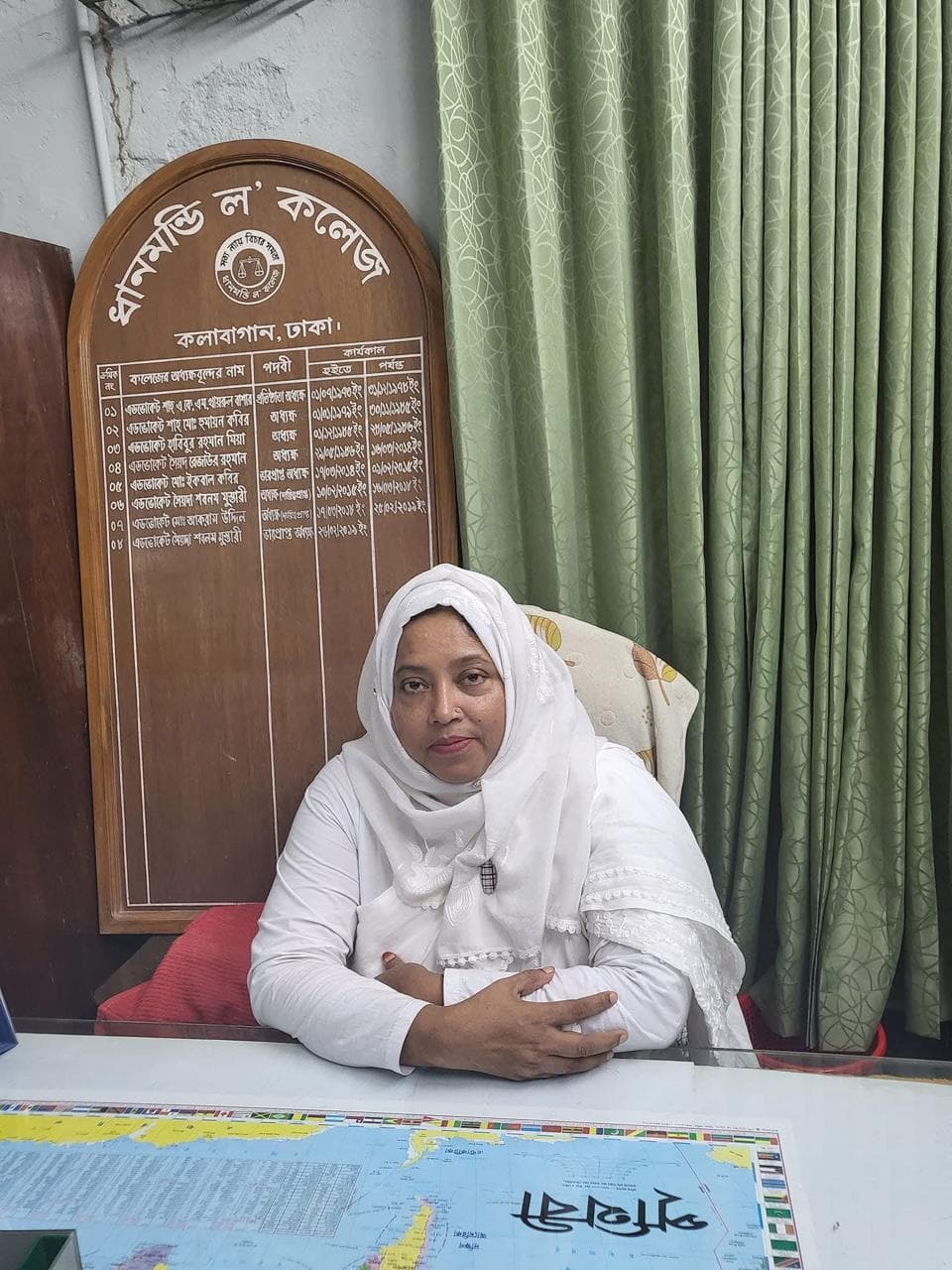
Advocate, Supreme Court of Bangladesh
Over 25 years of experience in criminal law and company law.

Tax Consultant
Over 35 years of experience in tax law advising individuals and corporations.
Regulatory Notice: This compliance guide is for general educational information only under Bangladeshi statutory frameworks (including the Income Tax Act 2023, Value Added Tax and Supplementary Duty Act 2012, and Companies Act 1994) and does not constitute formal legal or tax counsel. Government gazette rules, statutory regulatory orders (SROs), and procedural circulars are subject to periodic administrative updates. Please consult an EasyTax advocate or tax practitioner for customized advisory on your specific situation.